
Planning a kitchen remodel budget that actually holds
Kitchen budgets rarely blow up because of one big thing. They creep, one “while we’re at it” at a time. Here’s how to set a number, protect it, and still end up with a kitchen you love.
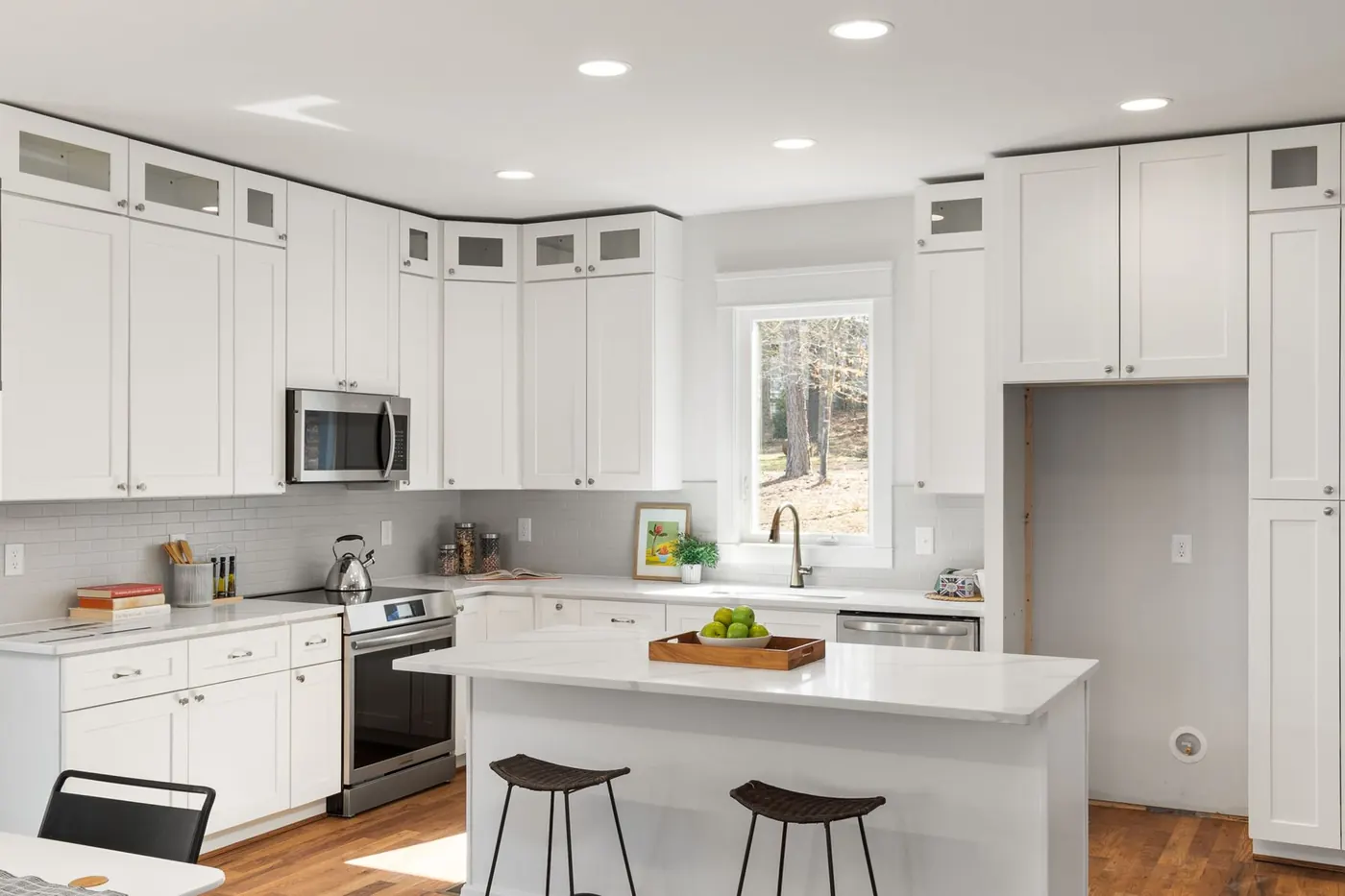
Step 1: Pick your tier honestly
Indianapolis-area cost data from CostPrism (2026) breaks kitchens into three tiers:
- Refresh, around $11,000: paint, hardware, lighting, no layout change.
- Mid-range, around $26,000: new cabinets, counters and appliances in the same layout.
- Full gut, about $57,000 and up: layout changes, custom cabinetry, high-end finishes.
Fixr’s national figures land in the same neighborhood, with an average around $27,000. If your wish list sounds like a full gut but your budget sounds like a refresh, it’s better to know now. Our kitchen remodel cost page has per-square-foot ranges.
Step 2: Know where the money goes
Fixr notes that labor typically accounts for 50% to 60% of a kitchen remodel. On the materials side, cabinets and counters are usually the largest line items, followed by appliances, flooring, lighting and backsplash. That’s why cabinet decisions move the total more than almost anything else.
Step 3: Set aside a contingency
Hold back a cushion for surprises behind walls and under floors. A common planning rule of thumb is 10% to 20% of the project, more for older homes. If you don’t need it, congratulations: you just paid for the nicer faucet.
Step 4: Understand allowances
If you haven’t picked the counter or tile yet, your estimate may include an allowance: a placeholder budget for that item. Make sure allowances are realistic for the style you like, or your “budget” is just an optimistic guess.
Step 5: Decide where to splurge and where to save
| Usually worth it | Easy places to save |
|---|---|
| Drawers and pull-outs in base cabinets | Keeping the sink and range where they are |
| Good task lighting | Stock or semi-custom cabinet sizes |
| A durable counter you won’t baby | Simple backsplash tile with one accent area |
| A quality faucet you touch every day | Reusing working appliances |
Step 6: Lock decisions before demo
Change orders mid-project cost more than the same choice made at the start, because they ripple through schedules and other trades. Decide the big things first, order them, then start.
Step 7: Bundle the small stuff
If you’re also planning to replace the flooring next to the kitchen, patch drywall, or fix trim, doing it in the same project saves setup and cleanup costs. That’s the jack-of-all-trades advantage: see general contracting.
Sources: CostPrism, Kitchen Remodel Cost in Indianapolis (June 2026); Fixr, Kitchen Remodel Cost (January 2026).